
Uganda Coffee Cascara: Market Potential, Quality Standards, and Sourcing at Origin

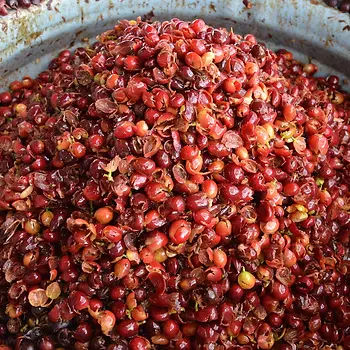
For most of Uganda's history as a top-tier coffee origin, the cherry husk was something left behind at the washing station. It was either composted or used as fuel. Over the last seasons, we've seen a shift.

What was once a waste product is now being processed with the same level of care as the green bean. For a bulk importer or trader, Uganda coffee cascara is becoming a practical addition to an origin contract.
It’s a way to offer a sustainable product that doesn't rely on the volatile C-market, while helping producers find a second source of income from the same harvest.
This export-grade Uganda coffee cascara has been dried to optimal moisture levels for stability during shipping.
Its deep flavor profile—featuring notes of dried fruit and tamarind—makes it a versatile, high-margin base for RTD cold brews, craft sodas, and botanical cocktail syrups.
What is Cascara?
Cascara is simply the dried skin of the coffee cherry. In the standard washed process, the skin and some pulp are removed and typically discarded. However, when these skins are separated and dried properly, they become a nutrient-rich "tea" that has its own unique market.
In Uganda, where coffee production is projected to grow by 15% in the 2025/26 season, the sheer volume of available cherry skins is massive. The challenge for the buyer has always been consistency, but that is changing as more washing stations invest in dedicated drying infrastructure.
Quality Standards and Shipping Stability
The biggest concern for any importer is whether the product will survive a 40-day transit from Mombasa. Cascara is highly absorbent, so if it isn't dried correctly at origin, you risk mold or "off" flavours by the time it reaches your warehouse.
When we look at export-grade Uganda coffee cascara, we focus on three main metrics:
Moisture Content: To ensure stability during sea freight, the cascara must be dried to between 10% and 12%. Anything higher risks the development of ochratoxin A (OTA), which can lead to rejections at the port.
Drying Method: We prioritise lots dried on raised beds rather than on the ground. This keeps the skins clean and allows for better airflow, preventing the "earthy" or fermented taints that often plague lower-quality batches.
Batch Uniformity: For industrial buyers looking at RTD (Ready-To-Drink) extractions, the size of the husk matters. We look for consistent "cuts" that allow for predictable extraction rates in large-scale brewing.
Navigating EUDR and Novel Food Regulations
If you are importing into Europe, the regulatory landscape is finally stabilising. Since cascara is part of the coffee fruit, it falls under the EU Deforestation Regulation (EUDR). This means every bag of cascara must be traceable back to a specific plot of land, just like your green coffee.
Following the latest legislative updates in late 2025, most Ugandan producers and exporters now have a window of about a year to bring their operations into full compliance. With the official deadline for large and medium operators moved to December 30, 2026, the industry is using this transition period to finalise geolocation mapping and digital traceability systems across the smallholder network.
Additionally, cascara is now officially a "Novel Food" in the EU. This has made the customs process much smoother than it was a few years ago, provided the product is labeled correctly as "coffee cherry pulp for infusions.
Flavour Profile: Why Choose Uganda Coffee Cascara?
While Central American cascara often tastes like sweet hibiscus or cherry, Uganda coffee cascara, particularly from the high-altitude regions of Mt. Elgon and the Rwenzoris, tends to have a deeper, more "jammy" profile.
You’ll typically find notes of:
Dried Fruits: Raisins, dates, and dark berries.
Honey and Tamarind: A syrupy sweetness with a balanced tang.
Tobacco and Leather: Deeper base notes that make it work well in craft soda syrups and cocktail concentrates.
Logistics for the Trader
Because cascara is light and takes up a lot of volume, shipping it isn't as straightforward as shipping a 60kg bag of green coffee. We recommend packing in 10kg or 20kg bags with GrainPro liners to protect against moisture spikes during the journey.
If you're already moving green coffee out of Uganda, adding a few pallets of cascara is a low-risk way to test the market for sustainable by-products.
Partner with an Established Ugandan Exporter
As direct exporters with a permanent presence on the ground in Uganda, we manage the entire supply chain, from cherry collection and bed-drying to final export via Mombasa. We ensure every lot meets moisture stability requirements and is fully compliant for the 2025/26 season.
To discuss contract volumes, request pre-shipment samples, or receive a landed cost estimate for your region, contact our export desk today.


Comments